ARCHITECTURE IS A WEAPON
Architecture shapes the conditions of everyday life. It can reinforce exclusion, consolidate ownership, and reproduce social divisions. It can also challenge these structures by expanding access to space and giving people the means to shape their environments. The question is whose interests it serves.
Housing must respond to those excluded from prevailing models of urban development. When access to a liveable home depends on purchasing power, architectural quality alone is insufficient. We must ask: for whom are we designing, where, and under what conditions?
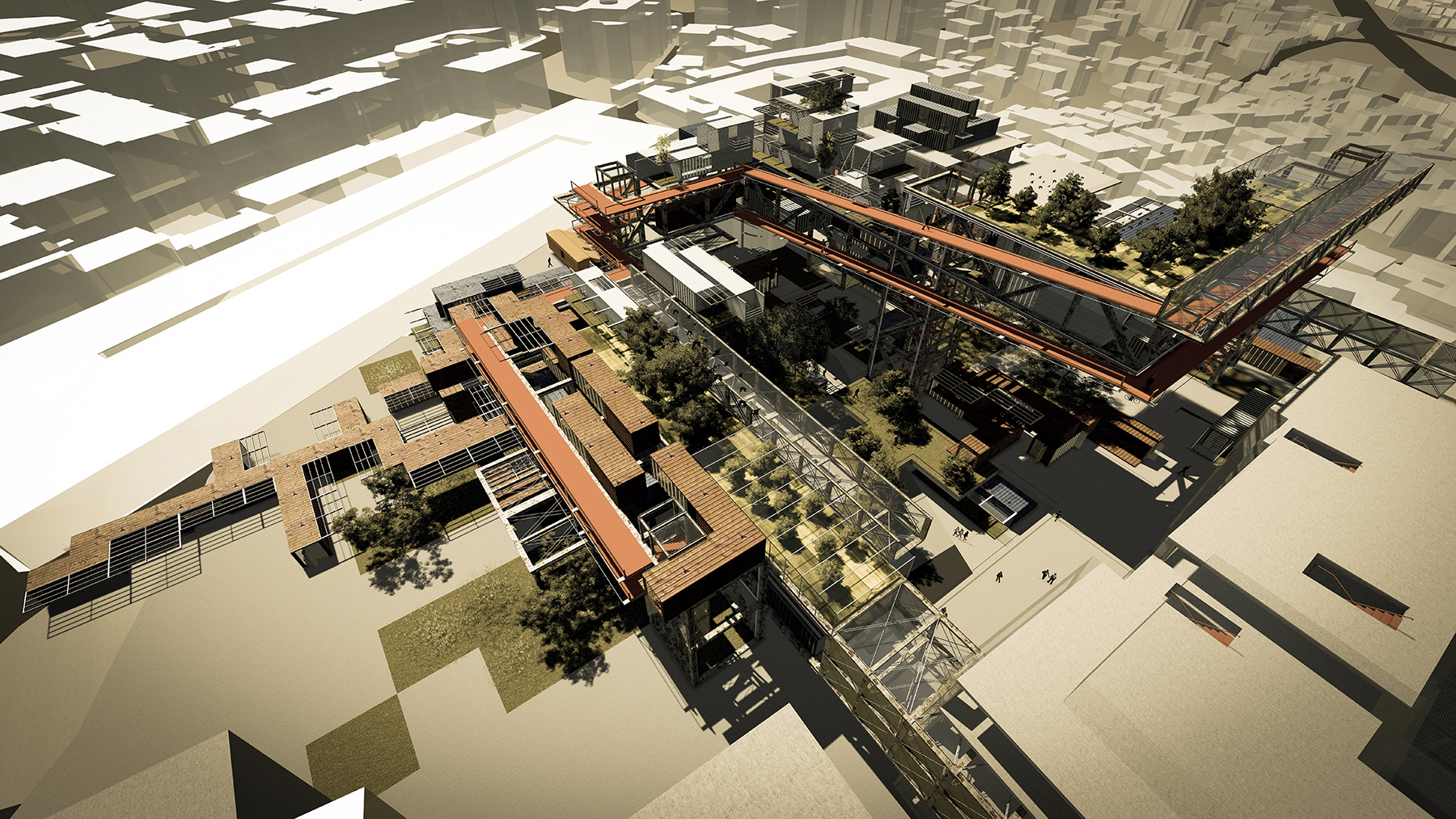
The proposed system treats housing as a generative framework, open to occupation, modification, and growth. It seeks to challenge spatial divisions between social groups and enable inhabitants to participate directly in the production of urban space.
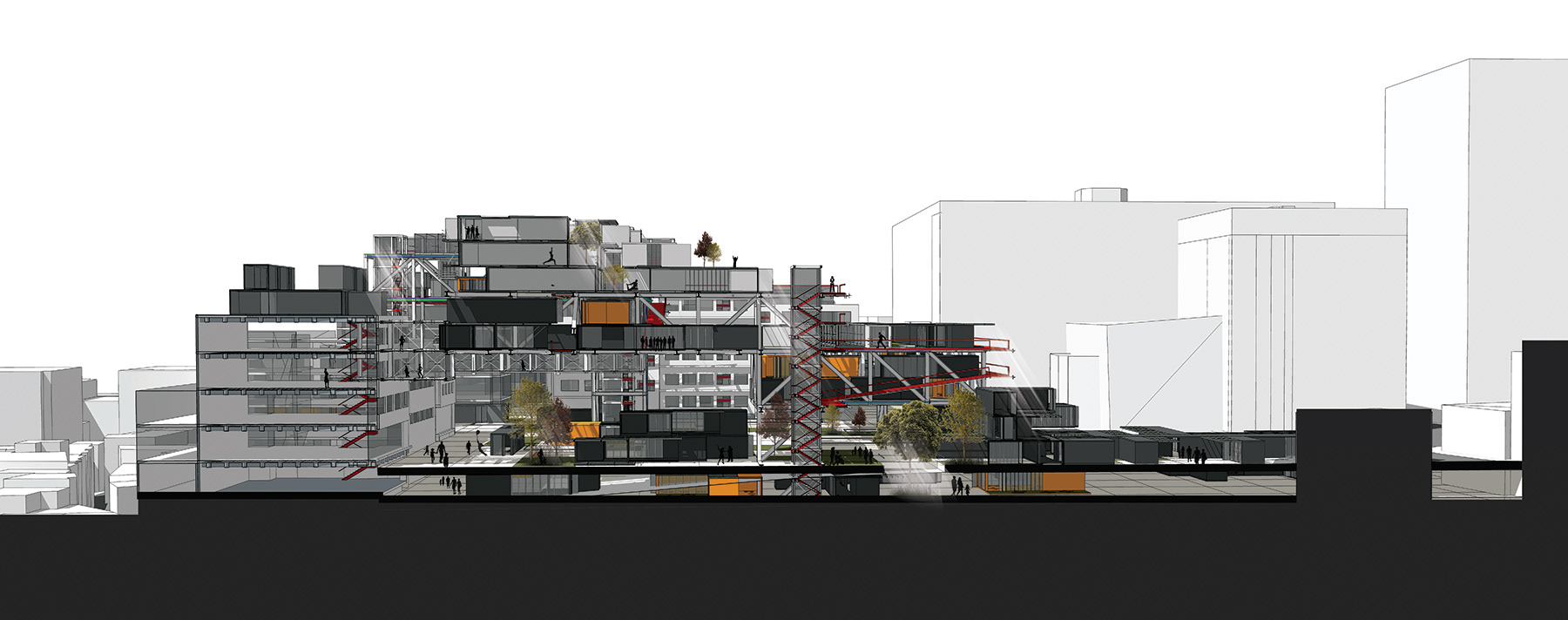
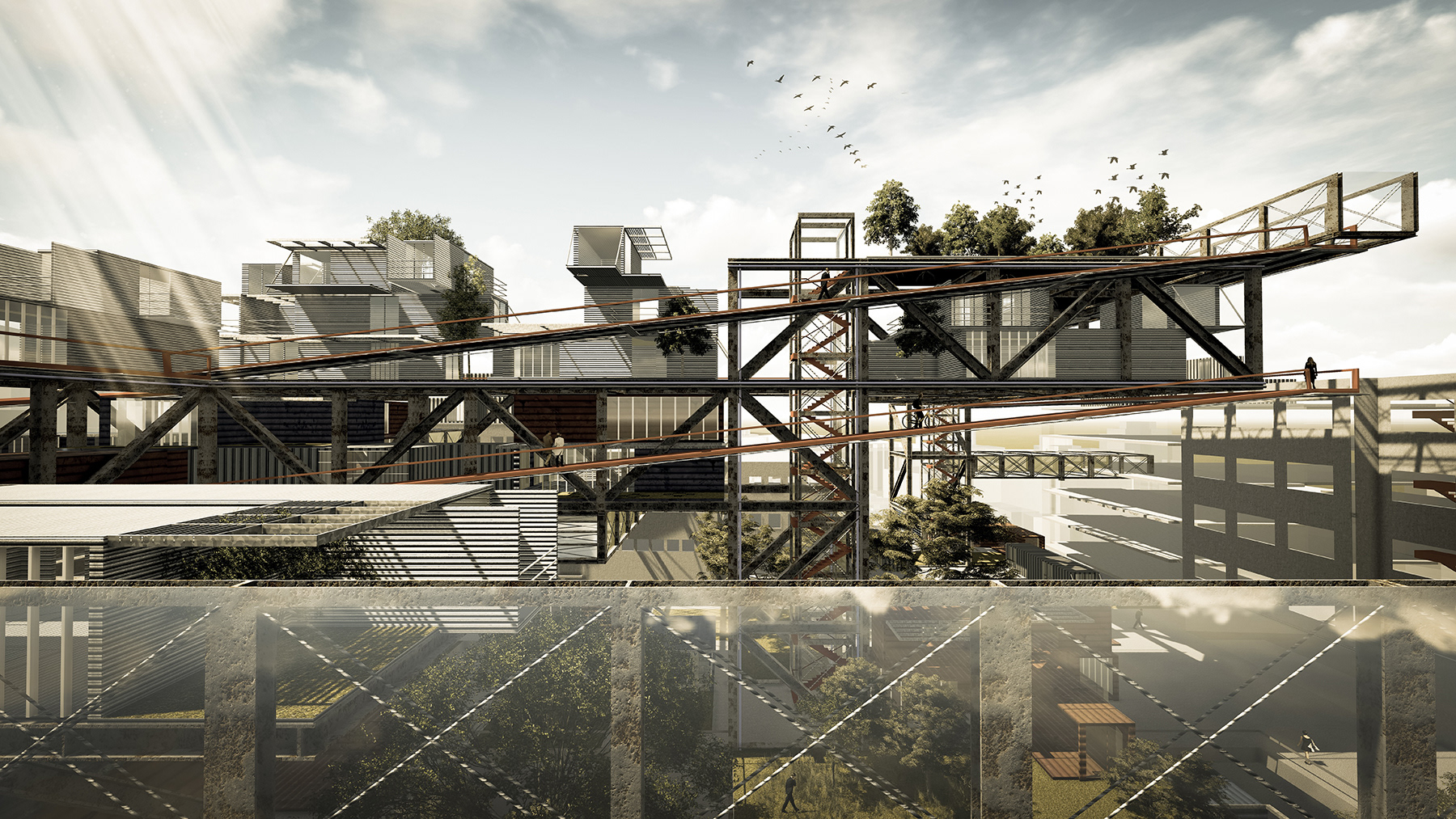
A modular frame accommodates container-based units whose functions and positions can change within the structure. Homes, workplaces, cafés, play areas, and shared facilities become parts of an evolving spatial arrangement. Inhabitants define how these units are used and how they relate to one another.
The system provides the codes; people write the programme.
This freedom operates within a shared framework committed to green space, opportunities for work and education, suitable living conditions, and equal rights. Reusable components and straightforward assembly are intended to support adaptation over time. The framework must also engage with surrounding buildings and activities, becoming part of the existing urban environment.
As an exploration of volumetric urbanism, the proposal asks how architecture can give inhabitants greater agency over the spaces they occupy. Its ambition is to make change possible through everyday use, collective decisions, and the capacity to adapt.
We all deserve a home—and a role in shaping the city around it.

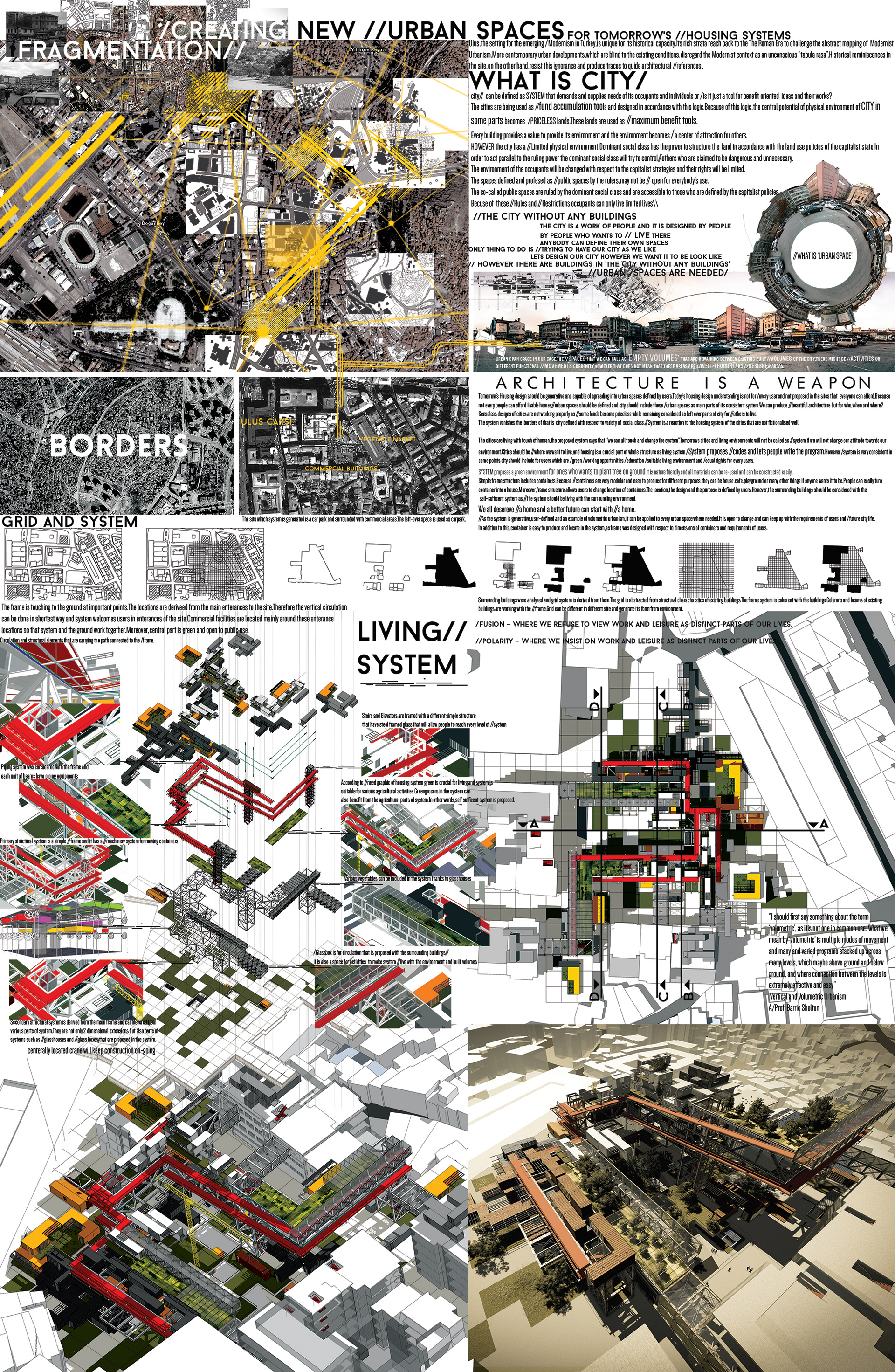
/Creating new //urban spaces
Ulus,the setting for the emerging /Modernism in Turkey,is unique for its historical capacity.Its rich strata reach back to the The Roman Era to challenge the abstract mapping of Modernist Urbanism.More contemporary urban developments,which are blind to the existing conditions,disregard the Modernist context as an unconscious ‘’tabula rasa’’.Historical reminiscences in the site,on the other hand,resist this ignorance and produce traces to quide architectural //references .
Ulus,the setting for the emerging /Modernism in Turkey,is unique for its historical capacity.Its rich strata reach back to the The Roman Era to challenge the abstract mapping of Modernist Urbanism.More contemporary urban developments,which are blind to the existing conditions,disregard the Modernist context as an unconscious ‘’tabula rasa’’.Historical reminiscences in the site,on the other hand,resist this ignorance and produce traces to quide architectural //references .

Metropolis/Movie
1930
1930

WHAT IS A CITY //
Is the city a living system that responds to the needs of its inhabitants, or an instrument for accumulating capital?
Urban development increasingly treats land and buildings as assets. Investment concentrates value in selected areas, attracting further development and transforming their surroundings. Yet urban space is finite, and the distribution of this value determines who can afford to remain, who gains access, and who is displaced.
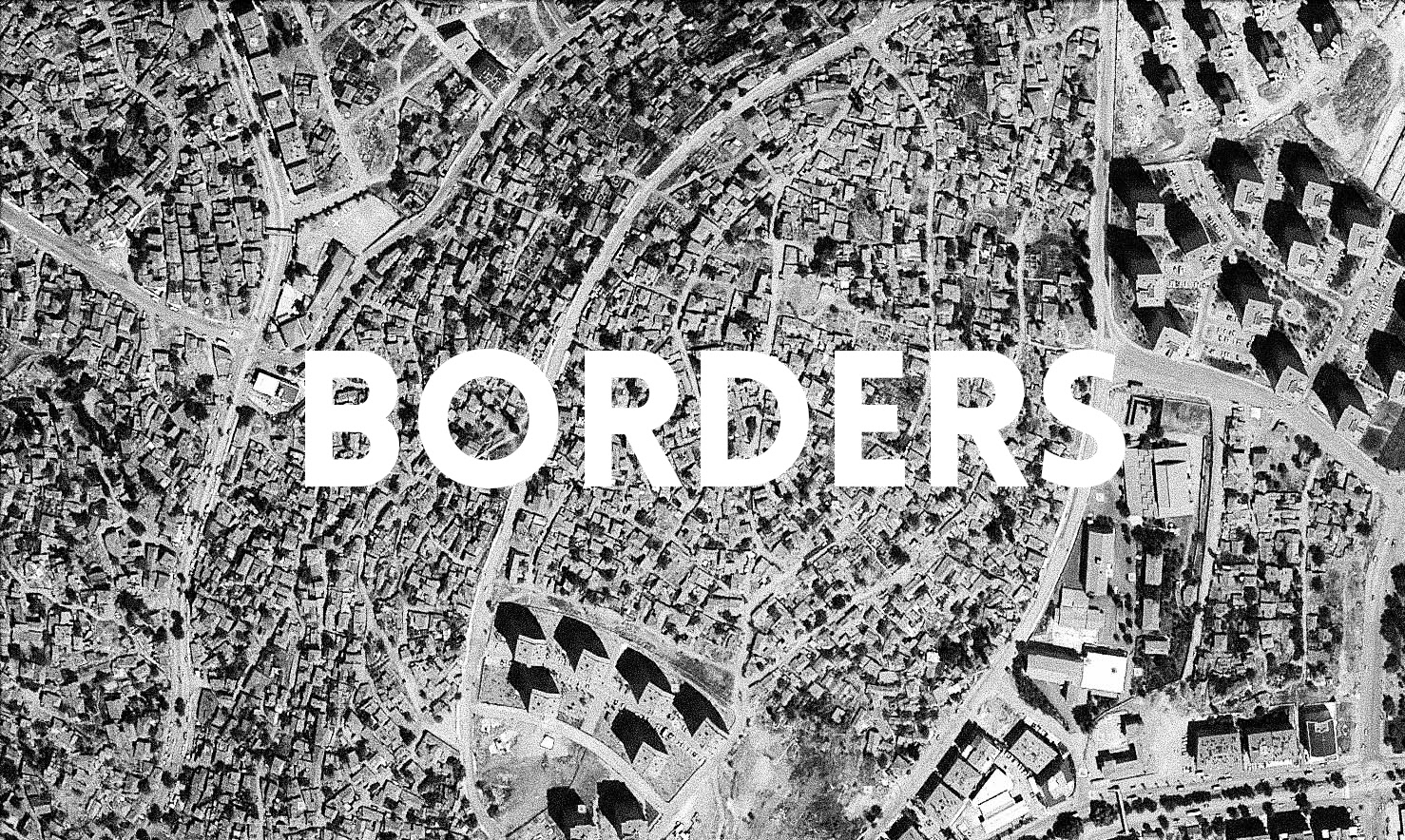
Dominant social groups shape land use through their influence over political decisions and planning policies. As urban environments are reorganised around financial interests, inhabitants’ ability to occupy, use, and transform them becomes constrained. Those considered undesirable are pushed towards the margins.
The designation of a space as public does not guarantee universal access. Rules, restrictions, and mechanisms of control determine which people and activities are permitted. Public space can therefore reproduce the inequalities it is expected to overcome.
These boundaries affect more than movement through the city. They limit everyday opportunities, encounters, and forms of participation.
If the city is a shared living system, who has the power to shape it—and who is allowed to belong?